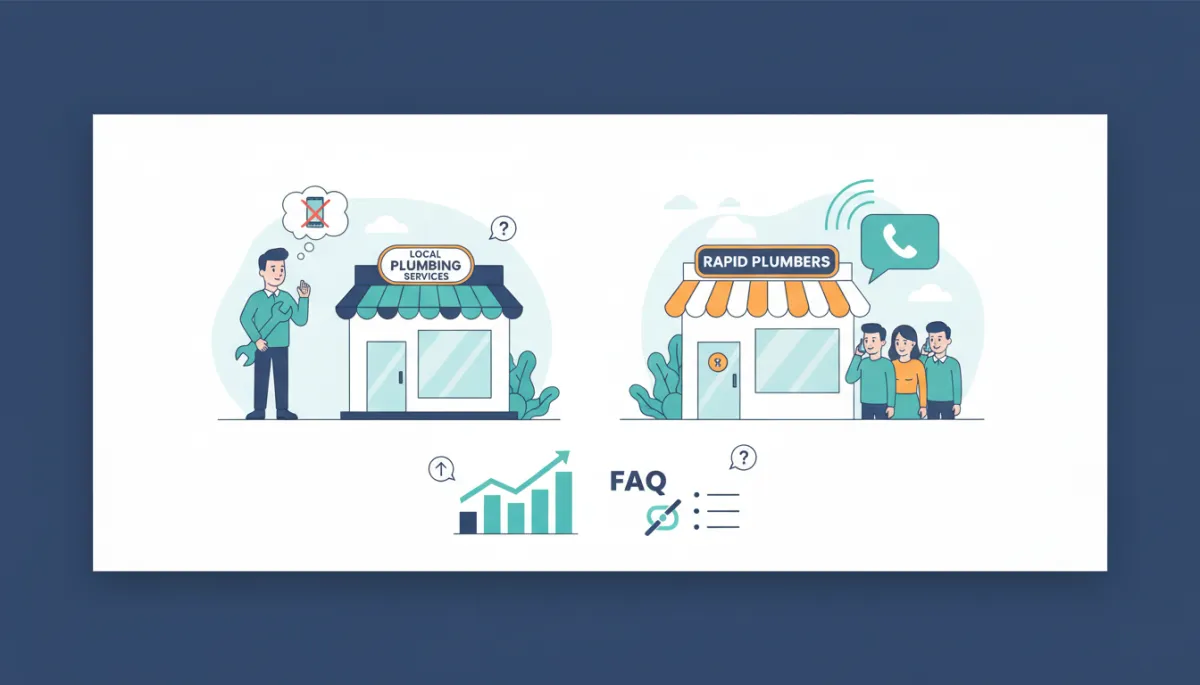
Boost Local Business Calls: Outshine Competitors
Local Marketing, Lead Generation, Small Business Growth
Why Your Competitor Is Getting More Calls Than You (Even Though Your Work Is Better)
If you run a local business, few things are more frustrating than watching a competitor with “okay” work stay busier, answer more calls, and book more jobs than you—while you quietly know your quality is higher. The problem usually isn’t your skill. It’s how effectively you’re being found, understood, and trusted by potential customers. This article breaks down why that gap exists and what you can do to flip the script in your favor.
The Harsh Truth: Better Work Doesn’t Automatically Win More Calls
In a perfect world, the best work would always win. In the real world, the business that wins is usually the one that is easiest to find, easiest to understand, and easiest to contact. That’s it. Your competitor may not be better at their trade—but they might be better at winning attention and converting that attention into phone calls and booked jobs.
For local businesses—contractors, clinics, law firms, salons, home services, and more—customers rarely “shop around” for long. They search, they skim, and they call whoever looks like the safest, fastest choice. If your competitor has invested in the right local marketing signals, they’re going to show up first and look more “ready” to help, even if your actual work runs circles around theirs.
💡 Quick mindset shift: You’re not just in the business of doing great work. You’re in the business of making it obvious to local customers that you’re the best choice—and making it incredibly simple to contact you.
1. Your Competitor Is Easier to Find Online (Especially on Google)
When someone in your city searches “plumber near me” or “best family dentist in [your town],” they’re not thinking about who does the most meticulous work. They’re looking at the first few options that appear in front of them, especially the ones in the Google map pack and top organic results. If your competitor shows up there consistently and you don’t, they will simply get more calls by default.
They may have a fully optimized Google Business Profile with photos, hours, reviews, and posts.
Their website likely has clear local keywords like “roofing company in [city]” in titles, headings, and content.
Their name, address, and phone number are consistent across directories, maps, and social profiles.
None of this guarantees they’re better at the work. It just means they’ve made it easier for Google to trust them as a local answer. When Google trusts them, customers see them. When customers see them, calls follow.
📌 Key takeaway: If you’re invisible in local search, your quality never gets a chance to compete. Visibility is the gateway to proving you’re better.
2. Their Website Is Built to Convert, Not Just “Look Nice”
Many local businesses treat their website like an online brochure: some photos, a few paragraphs, maybe a list of services. Your competitor might be treating their site like a sales and booking machine. That difference alone can double or triple the number of calls they get from the same number of visitors.
Clear call buttons: “Call Now” at the top of every page, clickable on mobile, with the phone number repeated in multiple places.
Simple contact forms: Short, easy-to-complete forms instead of long, intimidating questionnaires that scare people off.
Trust signals: Reviews, testimonials, “before and after” photos, guarantees, and badges (licensed, insured, certified).
Local clarity: They clearly state the areas they serve, so visitors immediately know, “Yes, they come to my neighborhood.”
If your site loads slowly, hides your phone number, or buries your services in cluttered text, you’re creating friction at the exact moment someone is ready to call. Your competitor, on the other hand, is rolling out a red carpet to their phone line.
💡 Want help turning your website into a call-generating asset? A focused local strategy from biscrest.com can help you redesign your online presence around one goal: more qualified calls from real local customers.
3. They Look More Trustworthy at a Glance (Even If You Actually Are)
Local customers make snap decisions. In a few seconds, they decide whether you seem trustworthy enough to call. Your competitor might be winning those few seconds with:
Professional branding: Clean logo, consistent colors, and modern, uncluttered design across their website, trucks, uniforms, and social media.
High-quality photos: Real team photos, real projects, and real customers—not just stock images or blurry snapshots.
Visible social proof: Star ratings, review counts, and testimonial quotes front and center, especially on mobile.
Remember, a potential customer doesn’t know you yet. They can’t see your craftsmanship or your years of experience. They only see what you show them on a screen. If your competitor has invested in looking organized, reliable, and established, they’ll win more calls—even if your actual work is superior once the job starts.
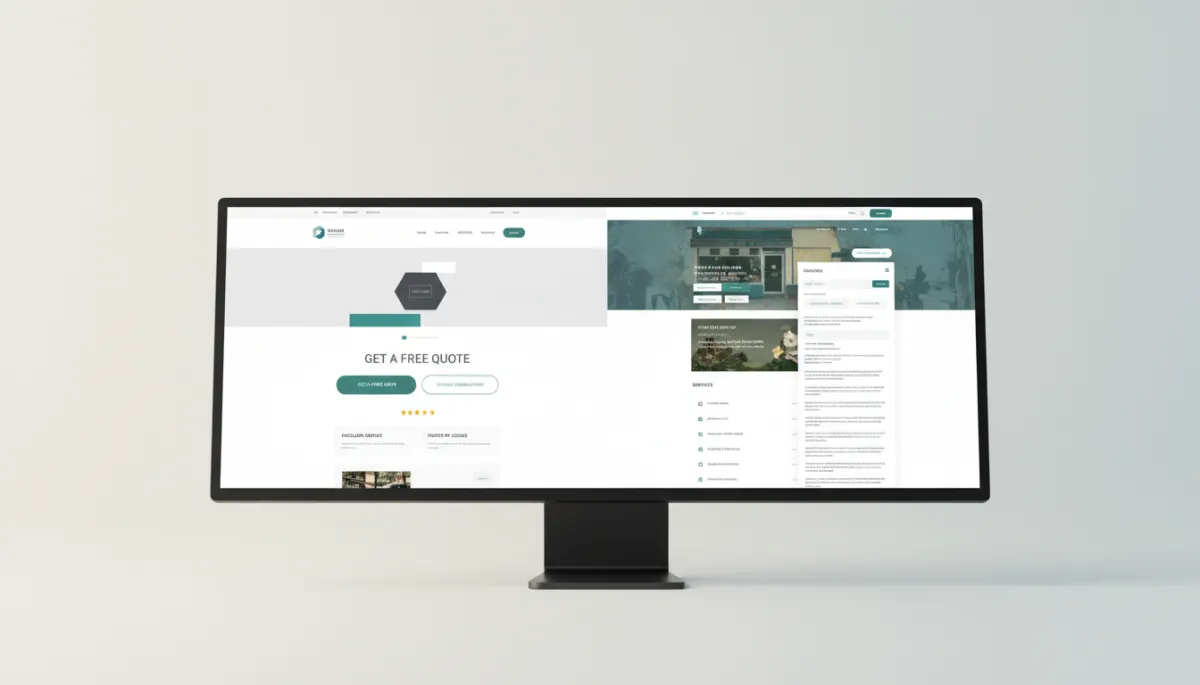
Small design and trust upgrades can dramatically increase the number of calls you receive.
4. They Ask for Reviews—and You Probably Don’t Do It Consistently
Reviews are the new word-of-mouth. For local businesses, they’re often the difference between a phone that rings and a phone that stays quiet. Many excellent businesses lose out simply because they never built a habit of asking satisfied customers to leave a review on Google, Facebook, or industry-specific platforms.
Your competitor might send a simple text or email after each job with a direct review link.
Their team might be trained to say, “If you were happy with our work, a quick review would really help us.”
They might even offer a small, ethical incentive—like entering customers into a monthly drawing for a gift card.
Over time, that steady trickle of reviews becomes a wall of proof: 137 reviews with a 4.8-star rating looks very safe to call. If you have only a handful of reviews, or a few old ones, you can appear less established—even if your business is older and more experienced.
📌 Action step: Build a simple, repeatable process for requesting reviews after every positive job. Make it as automatic as sending an invoice.
5. They Respond Faster and Pick Up More Often
Another unglamorous reason your competitor might be getting more calls: they answer more of them. Many local businesses lose leads simply because calls go to voicemail, messages sit unread, or inquiries through the website or social media get slow responses. When someone needs a local service, they’re usually not married to one provider. If you don’t answer, they move on to the next listing—often your competitor.
They may have a receptionist, answering service, or call-routing system to ensure calls are picked up quickly.
They might use text messaging to confirm appointments and respond to quick questions, meeting customers where they are.
Their website might include live chat or quick “request a call back” forms that get answered within minutes, not days.
You may be better at the work itself, but if you’re slow at picking up the phone or replying, you’re silently handing business to someone else.
6. Their Message Is Clear: Who They Help, What They Do, and Why It Matters
Your competitor might be better at explaining their value, even if they’re not better at delivering it. Many local businesses use vague or generic language like “quality service,” “customer-focused,” or “we do it all.” Customers skim right past that because it doesn’t answer their real questions:
Do you solve my specific problem?
Have you helped people like me in this area before?
How quickly can you help, and what will it roughly cost?
If your competitor’s website and profiles speak directly to those pain points—using simple, everyday language—they’ll feel more relatable and reliable. Customers won’t necessarily dig deeper to compare craftsmanship. They’ll call the business that sounds like it understands them best.
💡 Messaging tip: Replace generic phrases with specific outcomes. Instead of “high-quality roofing,” try “leak-free roofs that stand up to [your city]’s storms for years.”
7. They Invest in Local Visibility—You Rely on Referrals Alone
Referrals are powerful, but they’re unpredictable. Your competitor may be combining referrals with deliberate local marketing campaigns: search ads, map ads, Facebook or Instagram promotions, local sponsorships, and email follow-ups. When you rely only on word-of-mouth and repeat business, your call volume will rise and fall randomly. When they actively invest in visibility, their phone rings more consistently and from a wider pool of customers.
Local search ads that appear at the top of Google when someone in your area is ready to hire.
Retargeting ads that remind website visitors to come back and call if they didn’t book right away.
Simple email or text campaigns to past customers with seasonal offers or reminders.
This doesn’t have to be overwhelming or expensive. It just needs to be intentional. A modest, well-structured local campaign often outperforms a bigger, scattered one—and it can quickly put your phone on equal footing with your competitor’s.
💡 Not sure where to start with local visibility? The team behind biscrest.com specializes in helping local businesses turn scattered marketing into a focused, call-generating system that fits real-world budgets.
8. They Track What’s Working—and Double Down on It
Many local businesses don’t know where their calls actually come from. They “do some marketing” and hope for the best. Your competitor may be quietly tracking which channels produce calls—Google, ads, social, referrals, mailers—and shifting their budget toward what works best. Over time, this compounds: they waste less money on dead ends and invest more in proven call-drivers.
Using unique phone numbers for different campaigns to see which ads or pages generate calls.
Asking every new caller, “How did you hear about us?” and recording the answer.
Reviewing basic website analytics to see which pages people visit before they contact the business.
You don’t need complex dashboards to benefit from this. Even simple tracking can reveal that, for example, your “emergency service” page drives more calls than your homepage—so you might feature that service more prominently. Without this insight, you’re guessing. Your competitor is optimizing.
Turning the Tables: Practical Steps to Get More Calls Than Your Competitor
Knowing why your competitor gets more calls is only useful if you turn that knowledge into action. Here’s a practical roadmap you can start on this week—without needing a huge budget or a full-time marketing team.
Step 1: Fix the Basics of Your Local Presence
Claim and fully fill out your Google Business Profile with accurate hours, services, photos, and service areas.
Make sure your business name, address, and phone number are consistent across your website, maps, and directories.
Update your website so your phone number is visible and clickable on every page, especially on mobile.
Step 2: Make It Effortless to Contact You
Add a clear “Call Now” button at the top of your site and near the bottom of key pages.
Shorten your contact form to only the essentials: name, phone, email, and a brief description of the problem or request.
Consider adding a “Request a Call Back” option for people who don’t like calling first.
Step 3: Systematize Reviews and Social Proof
Create a simple review request message you or your team can send after each successful job, with a direct link to your review page.
Feature your best reviews and testimonials on your homepage and service pages, not just buried on a separate “Reviews” page.
Add short case stories: what the customer’s problem was, what you did, and the result. These make your expertise feel real and local.
Step 4: Improve Response Speed Without Burning Out
Set a clear internal rule: all missed calls are returned within a specific time window (for example, 15–30 minutes during business hours).
Use a professional voicemail that clearly states when callers can expect a response and offers an alternative (like texting) if appropriate.
If call volume is high, consider a basic answering service or call-routing solution so fewer leads slip through the cracks.
Step 5: Start Small with Local Marketing—But Start
Test a modest budget on Google search ads targeting your city and top services. Track how many calls come from these ads.
Run simple, location-targeted campaigns on Facebook or Instagram showing real project photos and inviting people to call or message.
Reach out to past customers with a short email or text: thank them, share a quick update or tip, and remind them you’re available if they need help again.
💡 Need a partner so you’re not doing all this alone? At biscrest.com, you can get structured, done-with-you or done-for-you local marketing support so your expertise finally gets the visibility—and phone calls—it deserves.
Frequently Asked Questions: Getting More Calls for Your Local Business
1. How long does it take to see more calls once I improve my local marketing?
It depends on your market and how competitive your niche is, but many local businesses see a difference within a few weeks. Quick wins often come from:
Making your phone number more visible and clickable on your website.
Running targeted local search ads that show up immediately when people in your area search for your services.
Asking recent happy customers for reviews, which can quickly boost trust on your Google listing.
Longer-term improvements, like ranking higher organically in local search, can take a few months—but they also tend to be more stable and cost-effective over time.
2. Do I need a big budget to compete with my local competitors?
Not necessarily. Many local businesses overestimate the budget and underestimate the power of focused basics. Cleaning up your Google Business Profile, improving your website’s clarity and calls to action, and building a steady flow of reviews often cost more time and attention than cash. Paid ads can help, but they don’t have to be huge to be effective—especially if they’re tightly targeted to your best services and your exact service area.
3. What if my competitor has way more reviews than I do—can I still catch up?
Yes. You don’t need to match them overnight. Customers look for a combination of recentness and overall rating. A business with 40 reviews from the last year and a 4.8-star average can look just as compelling as one with 150 reviews from several years back. Focus on consistently earning a few new reviews every week or month. Over a year, that adds up—and your profile will look fresh and active, which matters a lot to customers.
4. I’m busy actually doing the work. How can I manage marketing on top of everything else?
This is one of the biggest challenges for local business owners. The key is to systematize and delegate as much as possible. For example:
Create templates for review requests, follow-up messages, and social posts so your team can handle them without you rewriting everything.
Set aside a small, recurring weekly time slot (even 30 minutes) dedicated only to reviewing leads, updating listings, or responding to messages.
Partner with a trusted marketing service that understands local businesses, so you’re not trying to figure it all out from scratch.
Done right, marketing should feel like an engine running in the background—not a second full-time job on your shoulders.
5. What’s the first thing I should do this week if I want more calls?
If you want a single, high-impact starting point, do this:
Make sure your phone number is clearly visible and clickable on your website and Google Business Profile.
Ask the last 10–20 happy customers you served to leave a Google review, and send them a direct link to make it easy.
Decide on a simple rule for response time (for example, “we return all missed calls within 30 minutes during business hours”) and stick to it.
Those three steps alone can noticeably increase the number of calls you receive and help you convert more of the attention you’re already getting.
Final Thoughts: Let Your Quality Finally Win the Business It Deserves
Your competitor might be getting more calls right now, but that doesn’t mean they’re better than you. It usually means they’ve been more deliberate about how they show up online, how they collect and display proof, and how easy they make it to reach them. The good news is that every one of those advantages can be learned, improved, and—over time—surpassed.
As a local business, you don’t need flashy tricks or complicated funnels. You need a clear, trustworthy presence, simple ways for people to contact you, and a steady habit of staying visible in the places your customers are already looking. Combine that with the quality you already deliver, and your phone can become one of your strongest business assets instead of a constant frustration.
If you’re ready to stop watching competitors with weaker work win the calls you should be getting, consider getting structured support. Visit biscrest.com to explore how a focused local marketing strategy can help your business stand out, get found, and turn your expertise into a steady flow of qualified calls from the customers you most want to serve.